The world of 3D graphics has seen numerous stylistic evolutions over the years, but few have captured the imagination of artists and gamers alike quite like the low-poly aesthetic. Within this realm, the technique of low-poly normal mapping stands out as a fascinating blend of technical ingenuity and artistic expression. This method allows creators to imbue their minimalist models with a sense of depth and texture that belies their geometric simplicity, opening up new possibilities for visual storytelling and game design.
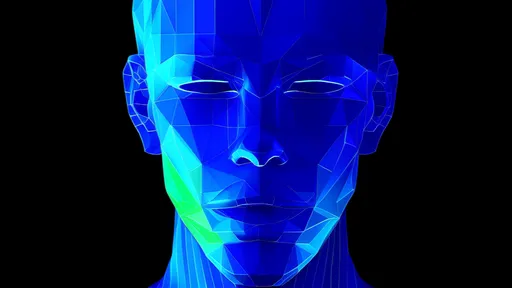
At its core, low-poly normal mapping is about deception—a clever trick played on the viewer's perception. By baking detailed surface information into a texture map, artists can make a model with relatively few polygons appear far more complex than it actually is. The magic lies in how light interacts with these textures, creating the illusion of bumps, grooves, and other fine details that aren't physically present in the mesh. When applied to low-poly models, this technique creates a striking juxtaposition between the model's deliberately simple geometry and the rich surface detail suggested by the normal map.
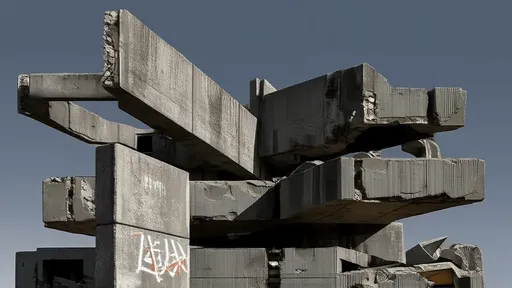
The process begins with careful planning of the base mesh. Unlike traditional high-poly modeling where artists might create intricate geometry first, low-poly normal mapping requires a different approach. Artists must strategically place polygons where they'll have the most visual impact while leaving other areas sparse. This selective density creates the characteristic angular look of low-poly art while providing just enough geometry to support the normal maps. The key is finding the perfect balance—too many polygons and you lose the stylized aesthetic, too few and the normal maps won't have enough structure to work with.
Texture creation for low-poly normal mapping often involves a mix of procedural generation and hand-painting. Many artists start by generating base patterns algorithmically, then refine them manually to ensure they complement the model's shape. The angular nature of low-poly models influences the texture design, with many artists choosing to emphasize the faceted look through deliberate, geometric patterns in their normal maps. This creates a cohesive visual language where the textures feel like a natural extension of the model's underlying structure rather than an afterthought.
Lighting plays a crucial role in bringing low-poly normal maps to life. Directional lights work particularly well with this technique, as they create strong highlights and shadows that accentuate both the model's geometry and the simulated detail from the normal map. Many artists working in this style prefer slightly exaggerated lighting setups that heighten the dramatic effect. The interplay between the hard edges of the low-poly geometry and the softer gradients suggested by the normal maps creates a distinctive visual tension that has become synonymous with the style.
One of the most compelling aspects of low-poly normal mapping is its performance efficiency. In game development, this technique allows for visually rich environments and characters without taxing hardware resources. The combination of simple geometry and detailed textures strikes an ideal balance between visual quality and rendering speed, making it particularly valuable for mobile games and other performance-conscious applications. This practical advantage has contributed significantly to the technique's popularity in the game development community.
The artistic possibilities of low-poly normal mapping extend far beyond technical considerations. Many artists use the technique to create works that feel simultaneously modern and nostalgic, blending contemporary rendering technology with a visual style that harkens back to early 3D graphics. The deliberate simplicity of the models, combined with the sophistication of the normal maps, creates a unique aesthetic that can convey everything from whimsical charm to stark minimalism depending on how it's employed.
As the technique has evolved, artists have developed numerous variations and refinements. Some experiment with mixing different levels of polygonal density within a single model, using normal maps to help blend the transitions. Others play with stylized normal maps that don't attempt photorealism but instead enhance the low-poly aesthetic with exaggerated or abstract surface details. These innovations demonstrate how normal mapping, often considered a tool for realism, can be just as powerful when applied to stylized artwork.
The future of low-poly normal mapping looks bright as new tools and rendering techniques continue to emerge. Real-time ray tracing, for instance, opens up interesting possibilities for how normal maps interact with lighting in low-poly scenes. Meanwhile, advances in procedural generation and AI-assisted texture creation may streamline the workflow for artists working in this style. What remains constant is the technique's ability to bridge the gap between technical constraints and artistic vision, proving that limitations can often breed the most creative solutions.
For artists looking to explore low-poly normal mapping, the learning curve can be surprisingly approachable. Many find that working within the constraints of a low-poly count actually simplifies certain aspects of modeling and texturing, allowing them to focus on strong shapes and clear visual storytelling. The technique rewards bold, deliberate choices and tends to work best when artists fully embrace its inherent stylization rather than fighting against it. As more creators discover this versatile approach, we're likely to see continued innovation in how low-poly models and normal maps work together to create compelling visual experiences.

By /Aug 15, 2025
By /Aug 15, 2025
By /Aug 15, 2025

By /Aug 15, 2025
By /Aug 15, 2025

By /Aug 15, 2025

By /Aug 15, 2025
By /Aug 15, 2025
By /Aug 15, 2025
By /Aug 15, 2025

By /Aug 15, 2025
By /Aug 15, 2025
By /Aug 15, 2025
By /Aug 15, 2025
By /Aug 15, 2025
By /Aug 15, 2025
By /Aug 15, 2025
By /Aug 15, 2025

By /Aug 15, 2025
By /Aug 15, 2025