The realm of computer graphics has long sought to replicate the mesmerizing complexity of water surfaces, and subsurface scattering remains one of the most challenging yet visually rewarding aspects of this pursuit. Unlike opaque materials, water interacts with light in a way that demands sophisticated shading techniques to capture its ethereal quality. Recent advancements in subsurface scattering water shader solutions have pushed the boundaries of realism, enabling artists and developers to simulate everything from tranquil ponds to stormy oceans with unprecedented fidelity.
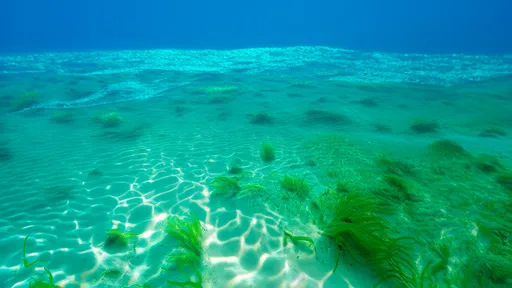
At the heart of these innovations lies a fundamental understanding of how light penetrates and diffuses through water. Traditional shading models often treat water as a simple reflective surface, but this approach fails to account for the way light scatters beneath the waves. Subsurface scattering water shader solutions address this by simulating the absorption and re-emission of photons within the water volume. The result is a more nuanced representation of light behavior, where deeper waters take on a darker, more saturated hue while shallow areas exhibit that familiar crystalline glow.
The mathematics behind these shaders involves complex calculations of light transport equations, often simplified through approximations like the dipole or multipole models. These techniques borrow from research in medical imaging and atmospheric sciences, where light propagation through participating media has been studied for decades. By adapting these principles to real-time graphics, shader programmers can now achieve effects that were previously only possible in offline renders. The key breakthrough comes from separating the light transport into direct and indirect components, allowing for efficient computation without sacrificing visual quality.
Art direction plays an equally crucial role in implementing subsurface scattering water shader solutions. While physically accurate models provide a strong foundation, artists often need to exaggerate certain effects for aesthetic purposes. The interplay between light absorption coefficients and scattering distances becomes a powerful creative tool. Warmer coastal waters might use shorter scattering distances with a yellowish tint, while deep ocean implementations could employ longer scattering with a bluish bias. This artistic control extends to handling suspended particles - the microscopic life and sediment that give real bodies of water their distinctive character.
Performance considerations remain paramount, especially for real-time applications like games. Modern subsurface scattering water shader implementations leverage screen-space techniques and temporal accumulation to maintain interactive frame rates. Some solutions utilize precomputed light transport maps or hierarchical approaches that concentrate computational effort where it's most visible. The balance between accuracy and performance often leads to hybrid solutions, where expensive calculations are reserved for foreground elements while background water surfaces use simplified models.
The environmental context surrounding water surfaces presents additional challenges that influence subsurface scattering water shader design. A mountain lake receives vastly different lighting than a tropical lagoon, and the shader must adapt accordingly. Sky dome illumination, cloud cover, and even the color of surrounding terrain all contribute to the final appearance. Advanced implementations now incorporate these factors through dynamic environment probes and global illumination systems, creating water surfaces that truly belong in their surroundings rather than appearing as detached visual elements.
Looking toward future developments, machine learning shows promise for accelerating subsurface scattering water shader computations. Neural networks trained on optical simulations could potentially replace some of the more expensive calculations with high-quality approximations. Meanwhile, hardware advancements like real-time ray tracing open new possibilities for ground-truth accuracy in water rendering. As these technologies mature, we may see water shaders that automatically adapt to diverse conditions without extensive manual tuning, bringing us closer to the elusive goal of perfect digital water.
For content creators working with subsurface scattering water shader solutions, the workflow implications are significant. Traditional texture painting gives way to parameter tweaking of physical properties, requiring a different skillset from artists. Tools for visualizing light paths and scattering profiles become invaluable for debugging and artistic control. The most successful teams are those that foster close collaboration between technical artists and rendering programmers, ensuring that the shader's capabilities align perfectly with the project's visual goals.
The impact of these advancements extends beyond mere visual splendor. In educational software, accurate water rendering aids in understanding marine ecosystems. For architectural visualization, realistic water features can make or break a client presentation. Even in abstract applications, the emotional resonance of well-rendered water contributes to player immersion and viewer engagement. As subsurface scattering water shader technology continues evolving, its applications will only broaden, cementing water rendering as one of computer graphics' most vital and vibrant frontiers.

By /Aug 15, 2025
By /Aug 15, 2025
By /Aug 15, 2025

By /Aug 15, 2025
By /Aug 15, 2025

By /Aug 15, 2025

By /Aug 15, 2025
By /Aug 15, 2025
By /Aug 15, 2025
By /Aug 15, 2025

By /Aug 15, 2025
By /Aug 15, 2025

By /Aug 15, 2025
By /Aug 15, 2025
By /Aug 15, 2025

By /Aug 15, 2025
By /Aug 15, 2025
By /Aug 15, 2025

By /Aug 15, 2025
By /Aug 15, 2025